Contributors this month include 2cross2affliction, dronon, earthfurst, and EberraWolf.
Original post written by
Contributors this month include 2cross2affliction, dronon, earthfurst, and EberraWolf.
Original post written by


In a small conference room at Furpocalypse is a man in a plain t-shirt and jeans assembling something. Sets of aluminum panels rise to the ceiling, ever so slightly too tall for the room, so some panels were hodge-podged to fit. This contraption, arranged in a circle, is temporary and collapsible. Wires are snaking between these flats to connect them to a network switch and a laptop. Standing in the center, you realize what this is: a scanner.
Figure Fusion 3D, a company that goes around to conventions, lets people take a complete scan of themselves and, later, receive a colored 3D figurine in the mail. Founded by Bobby Dyer roughly four years ago, it makes a couple of stops a year scanning people. It is Dyer’s first time at a furry convention, yet it seems like a natural fit for people wanting replicas of the fursuits and other costumes they bring.
Original post written by EberraWolf
Boo! Hope I didn’t scare you all there! I doubt I did, but we’re marching out of the spooky haunted mansion that October kept us trapped in until we fed the ghosts all of our candy! Surely, you saved some candy for yourself… or for me! If you didn’t, then that’s okay— the month of November is upon us and we shall fill our bellies with Thanksgiving meals! Welcome to November, everyfur!
We received tons of Book Bundle sales during October! Thank you all for showing so much love to me and the rest of my talented guild members and supporting us! You’ll enjoy all of those stories if you bought the bundle. If you didn’t buy it, then you’ll have to wait until next October for next year’s Furry Book Month! Keep on reading and writing!
Our outstanding Vice President created an updates page for the site! You can view it now to keep up with the latest changes and updates within the FWG! Check it out now!
Updates Page: https://furrywritersguild.com/updates-and-upcoming/
We’ve created another quick and easy way to support members of our guild. On Bluesky, we now have a Starter Pack for FWG Members and FWG Associate Members! If you’re part of the FWG and would like to be part of the Starter Pack, then contact the President or the Vice President and we’ll get you on the pack. If it gets full, then we’ll just make another one for more members! Help your fellow furry friends out and check out their works!
Find the Starter Pack here! https://bsky.app/starter-pack/furrywritersguild.bsky.social/3mrqiuhsbsn2m
If you want to support the FWG more, then we have a Paypal and Patreon for you to donate to! This helps with future endeavors for this awesome guild we run here! So, if you choose to donate, thank you tons! We appreciate you forever and always!
FWG Paypal: https://www.paypal.com/donate/?hosted_button_id=2ACUCFGMBZY4A
FWG Patreon: patreon.com/furrywritersguild
My fellow writers and authors… It’s totally fine to stay comfy with where you’re at, but if you have that feeling that you must reach for higher goals— then go for it. It’s perfectly fine to move that goal post, or even forge new goals for you to achieve! Don’t let anyone stop you from bettering yourself and becoming the best version of you. Not even yourself! You must be the one to break free from your comfort zone and seek something greater! I know you can do it, because you’re strong, beautiful, talented, and breathtaking! Never stop creating, fellow guild members!
-Flash Kitterson
Here are the open markets from your Guild Markets Manager:
November open markets:
## Open now!
### Short fiction, nonfiction, and poetry:
#### Limited-time windows:
* #ohmurr – erotica fiction, essays, hookup stories, poetry, and book reviews, 2,000 – 6,000 word essays, 1 – 2 pages of poetry, 100 – 300 word hookup stories, fiction and essays pay $20, closes Nov 20 | https://ohmurrmag.carrd.co/#submissionguidelines
* Children of the Night – any genre (including erotica) about the goth subculture, 5,000 – 20,000 words, pays 0.5 cents/word, closes Dec 31 | https://armouredfoxpress.wixsite.com/website/furry-call-for-submissions
* Cyber Claws – mecha stories by furry authors, 3,000 – 6,000 words, pays $10, closes April 7 | https://cyberclawsanthology.wordpress.com/submissions/
* My Beloved Monster – PG-13 and under stories and poems about relationships with monsters, up to 10,000 word stories and poems, pays 8 cents/word, closes December 31 | https://tally.so/r/ODNBRp
* This is Halloween – any genre (including erotica) about Halloween, 3,000 – 12,000 words, pays 0.5 cents/word, closes Dec 31 | https://armouredfoxpress.wixsite.com/website/furry-call-for-submissions
* Texas Furry Fiesta Campfire Tails – scary stories, 500 – 2,000 words, until Feb 19 | https://bsky.app/profile/furryfiesta.org/post/3mw4it244bi2a
#### Open until further notice:
* Dinner at Yiffany’s – erotica, <15,000 words | https://www.dinneratyiffanys.com/story-submission-guidelines/
* The Voice of Dog – any genre, < 10,000 words | https://thevoice.dog/?page=rules
### Books:
* Bewere – comics, graphic novels, artbooks, fiction, games, nonfiction, and other items, 32 – 100 page comics, 30,000 – 120,000 word fiction and nonfiction | https://bewere.net/submissions.php
* Doppelfoxx Publishing – comics, graphic novels, artbooks, poetry chapbooks, poetry collections, novels, and novellas, unknown wordcount minimums/maximums | https://doppelfoxxpublishing.com/pages/publication
* Fenris Publishing – comics, graphic novels, artbooks, fiction, games, nonfiction, and other items, 32 – 100 page comics, 30,000 – 120,000 word fiction and nonfiction | https://www.fenrispublishing.com/submissions.php
* FurPlanet – comics and magazines, unknown wordcount minimums/maximums | https://furplanet.com/shop/custom.aspx?recid=8
* Transcendent Fiction Publishing – [only accepting submission from trans men and women, nonbinary, and cis female authors] sci fi, fantasy, and furry comics, graphic novels, artbooks, novels, novellas, and single-author collections, 30,000 – 120,000 word novels, novellas, and collections, closes Nov 29 | https://www.tfpublishing.com.au/submission-guidelines
### Non-furry Publishers, but furry-interest calls:
* Astral Alien Fiction – stories from alien povs (space aliens, planets, cosmic horrors, etc), 1,000 – 7,000 words, pays 1 cent/word with a $20 minimum, closes Dec 15 | https://astral-af.org/submissions.html
* Divergent Space – stories and poems about neurodivergent characters set in the future, no word/line maximums, pays $5+, depending on length, closes Jan 31 | https://www.manawaker.com/submit-to-divergent-space/
* Superheroes/Supervillains – stories about supes (good and bad), 8,000 – 10,000 words, pays $100, closes Dec 1 | https://bigbearpress.com/submissions
* Untitled Orc Erotica Anthology – Orc erotica, 5,000 – 20,000 words, pays 0.5 cents/word, unknown close date | https://armouredfoxpress.wixsite.com/website/nf-call-for-submissions
Please check out the 2026 book releases from our members:
Tethers Torn [Book 2], by Utunu, Released March 2026.
Archon [Book 2], by Mark Smith, Released March 27th, 2026.
Disaster Queers: Night at the Museum, by Alison Cybe, Released April 1st, 2026.
Howling Dead, by Vincenzo Pasquarella, Released April 13th, 2026.
Space Dragons: Cosmic Survivors, by Veo Corva, Released April 20, 2026
Travels, by Erin Lee, Released April 26th.
A Rodent of Unusual Size, by Rebecca Cascane, Released April 26th.
The Morning After, by J.F.R. Coates, Released April 26th.
Weasel Under the Sun (A Stone & Cooke Mystery), by Kyell Gold, Released May 2026.
Game Of Life, by Rob MacWolf & Alex Vance, Released June 15th, 2026.
Lesser Gods: Retribution, by Alex Frey, Released June 16th, 2026.
Vanguard: Roswell 1947, by Lauren Rivers, Released July 8, 2026.
Disaster Queers: Emmlie’s Eleven, by Alison Cybe, Released July 25th, 2026.
Helkite, by Roscoe G. Beetle, Released August 26th, 2026.
The Stumble Inn, by Ty Fox, Released Sept. 2, 2026.
The Moonhound, by K.C. Shaw, Released October 20th, 2026.
Wolf’s Curse, by J.F.R. Coates, Releases November 15, 2026.
Kingsfang, by Vincent Blackwell, Releases November, 2026.
FWG Members- remember to use the Promotion Tip Line!
https://forms.gle/keTnEt1UG59qMqZ29
Original post written by F.K.
 Wildwood (trailer) is a fantasy action-adventure film released in October 2026 by Laika, a studio that specializes in stop-motion animation. It’s their sixth feature-length film, clocking in at 132 minutes, directed by Travis Knight and written by Chris Butler, based on a book published in 2011 that Laika immediately planned to adapt. Fifteen years later, here we are!
Set in the Pacific Northwest around 1990, a 14-year old girl named Prue is growing up in Portland, Oregon. After her parents ask her to babysit her baby brother, who is forbidden to go outside, she naturally rebels and takes him with her as she bikes around town.
When her brother is suddenly kidnapped by supernatural forces, Prue follows the trail into the nearby impassable wilderness, a huge neighboring territory that magically stops anyone from entering. But Prue manages to cross over, accompanied by Curtis, a kid her age from school. On the other side of the barrier is a fantastical world of humans, talking animals, and occasional magic. It is not a safe place.
Original post written by dronon

This conversation plays out hundreds of times a day, but (thankfully) only a handful of those involve me:
Conspiracy theories about the NSA and/or NIST are a dime a dozen these days. And, ever since the Snowden disclosures in 2013, I am politically primed to directionally agree with distrusting the US government wholesale.
But most of the technical arguments baked into folks’ conspiracy theories make no goddamn sense.
This distrust is not exclusive to only the US government.
The goal of this blog post is not to convince you that you should trust any government; just that they are not magical or omniscient.
To that end, I’m going to explore some of the history of NSA, NIST, and cryptography standardization. Then, to explore some of the conspiracy theories that were being floated about such activity, and what we’ve learned in the years since (especially in the past month). Finally, I’m going to examine some of the current conspiracy theories floating around message boards and social media today, and explain why they’re almost certainly wrong.
Buckle up, this is going to be a tedious one.
If you find yourself asking a question like this, the correct answer is simply, “You shouldn’t.”
After all, I have never held (let alone even applied for) a security clearance, and have no access to any non-public information. I’m also not a current or former government employee, and have no aspirations to ever become one. I have access to all the same facts anyone else does.
In balance, I have no horse in the race of who trusts whom. I’m just tired of hearing the same poorly reasoned arguments all the damn time, and would like to stop having to repeat myself when I encounter one.
The sources for this, by the way, are the declassified United States Senate Select Committee on Intelligence and United States Cryptologic History.
The Data Encryption Standard (DES) was published in the Federal Register in 1975 and then standardized in 1977.
We consider it weak these days, but DES was a real game-changer for its time: It offered a standard block cipher to use for sensitive (but not classified) commercial applications. Prior to DES, the history of cryptography was largely about military uses (except a few quirky mathematicians here and there), going back before Caesar’s cipher.
From declassified documents, we now know the full story, but from the time that DES was first standardized, up until recent years, there have been a concerns about NSA’s involvement.
We sent the S-boxes off to Washington. They came back and were all different.
Alan Konheim, quoted in Applied Cryptography, p. 280
To say that academics did not trust DES would be putting it mildly: Martin Hellman (who, with Whitfield Diffie and Ralph Merkle, invented public-key cryptography) sent a letter in 1975 to the National Bureau of Standards that stated:
Whit Diffie and I have become concerned that the proposed data encryption standard, while probably secure against commercial assault, may be extremely vulnerable to attack by an intelligence organization.
Martin Hellman, re-published in this paper in 1990.
At the heart of the concern about DES was something called an S-box, which simply maps an input to an output, but whose purpose is to provide a non-linear transformation to obscure the relationship between the ciphertext and the key.
The S-box used by DES was chosen by NSA. This led a lot of people to suspect there was a backdoor in the selection of the S-boxes for DES. It turned out to be the opposite, of course: The NSA had discovered differential cryptanalysis in secret, and had selected S-boxes that were resistant to this technique, but did not want to reveal it publicly (lest they lose their advantage over rival nations).
There’s a lot more details to this story than I want to bore anyone with, so I recommend reading up on the history of cryptography and cryptanalysis if you’re interested in such things.
In balance, at the advice of NSA, the final DES design did only offer 56 bits of security (down from an original key size of 128 bits). This short key ultimately allowed the EFF to crack DES in 1998 with a hardware cost of about $250,000.
When IBM was designing DES, with feedback from NSA, the stated purpose was to use for commercial cryptographic applications in the United States.
Fact: NSA used secret cryptanalytic capabilities to ensure the resulting block cipher that became DES was protected from the attack they knew about without revealing said technique.
Fact: NSA recommended reducing the key length from 128 bits to 64 bits (with 8 of the key bits serving as parity bits, thus making it only have 56-bit security).
This both strengthened and weakened DES in different ways. A 56-bit key can be broken by a distributed computing effort in under 24 hours, as of 2012.
This is confusing until you remember NSA has two opposing missions, with (unfortunately) military jargon names.
The COMSEC folks have a mission to secure the US government and protect US interests (read: private sector).
The SIGINT folks have a mission to spy on other nations on behalf of the US.
In theory, the SIGINT folks aren’t supposed to spy on Americans at all. In practice, their Five Eyes partners gives them a stupid loophole: An allied nation can simply do the spying for them, so long as federal prosecutors are willing to engage in a little bit of parallel construction.
Take note of the DEA section of the previously linked Wikipedia page.
You cannot trust the government, but if you know the mission each department operates under, you can understand their incentive structures. Knowing their incentive structures lets you reason about their actual activities–or, failing that, create conspiracy theories with a cohesive narrative.
The COMSEC mission can be related to the S-box strengthening; the SIGINT mission, to the weaker key length.
Okay, so the DES thing was a messy affair. Let’s look at an example of the NSA clearly being on the wrong side of privacy.
The Clipper Chip, which was designed and promoted by the NSA in 1993 to secure voice messages, with a backdoor.
Clipper Chip was an early example of a NOBUS (Nobody But Us can exploit it) backdoor. Unlike DES’s 56-bit key, the cipher used (Skipjack) was promoted up to a whopping 80-bits.
But before you celebrate, be aware that there was a “key escrow” feature that allowed law enforcement to decrypt plaintext, and a 16-bit hash in the “Law Enforcement Access Field” (LEAF) that turned out to be a pretty stupid vulnerability, as Matt Blaze discovered in 1994. If you want a technical breakdown, Professor Matt Green’s blog post covers this (and other backdoors).
Not only was the Clipper Chip a terrible idea to begin with, it was also technically flawed (to the point of embarrassment). This was the first of many issues in what became known as the Crypto Wars.
When the NSA colluded with law enforcement to spy on Americans’ private conversations, their attempt was met with public backlash from independent technologists (Matt Blaze, the Electronic Frontier Foundation, etc.).
The cryptography community outside the military-industrial complex today is largely primed to call out Clipper Chip style bullshit whenever it happens. (See also: the EU’s ChatControl.)

In 2006, NIST published SP 800-90, which recommended deterministic random bit generators (DRBGs):
The three I listed above are… well, they’re fine. Pretty much everyone uses hash functions or block ciphers to squeeze random bits out of smaller amounts of entropy.
But the fourth entry in the NIST standard was an odd duck. Dual_EC_DRBG was several times slower than the other recommendations and was immediately flagged as having a backdoor (which other cryptographers agreed with).
I don’t understand why the NSA was so insistent about including Dual_EC_DRBG in the standard. It makes no sense as a trap door: It’s public, and rather obvious. It makes no sense from an engineering perspective: It’s too slow for anyone to willingly use it. And it makes no sense from a backwards-compatibility perspective: Swapping one random-number generator for another is easy.
My recommendation, if you’re in need of a random-number generator, is not to use Dual_EC_DRBG under any circumstances. If you have to use something in SP 800-90, use CTR_DRBG or Hash_DRBG.
In the meantime, both NIST and the NSA have some explaining to do.
Bruce Schneier, Wired, 2007
Of course, because of Edward Snowden, we know today that cryptographers were completely correct about Dual_EC_DRBG being a backdoor by the NSA.
Ever since that revelation, no discussion about NOBUS (Nobody But Us) backdoors would be complete without at least mentioning Dual_EC_DRBG.
What almost nobody foresaw, however, was that a rival nation state would replace the public key baked into Dual_EC’s design with their own while backdooring Juniper Networks.
Kind of a stupid fucking approach to NOBUS, ain’t it?
When the incentives of the NSA aligned with malicious government conspiracies against the American people (sorry to keep specifying this, by the way, but they’re pretty much always malicious to folks outside the USA) and standardization processes, it didn’t fly under the radar and basically every cryptographer said “Hell no” to using it.
Whether NSA is capable of being sneakier while corrupting NIST documents remains to be seen.

There’s far too much to talk about here, and of varying usefulness. Consult the Snowden Archives if you want to read more. There were a lot of codenames. There was a lot of jargon.
It spawned a lot of memes.

Some of the codenames (e.g., FOXACID) are the sort of thing that cause eyebrows to raise among computer nerds that are familiar with furries and vore.
Here’s a lightning round of some of what we learned from Snowden:
There’s so much more we could talk about, but what’s notably absent from Snowden’s leaks is any secret cryptanalytic attacks against standardized cryptography.
Notably, they couldn’t break Tor in any way that wasn’t already known to the Tor developers at the time.
Hell, there were myriad conspiracy theories in late 2013 about the Silk Road marketplace being taken down by a NSA attack on Tor. The slide decks Snowden leaked suggest otherwise.
A lot. Far too much, in fact, for me to dissect it all in this blog post!
But the pertinent detail is this: The absence of cryptanalytic capabilities in Snowden’s leaks can be interpreted one of several ways.
Personally, I think any of these interpretations is valid. I’d put my money on number 3, of course. After all, that’s what PRISM largely did.

I omitted several controversies from the previous section, because it was getting too long and I feel I justified my point already. However, I’m sure some people will cry foul at omissions as an attempt at deception, so I need to also mention one that was recently solved.
The what now?
Elliptic curve cryptography is a whole topic I’ve talked about on this blog before, at length, but I’m going to simplify for the sake of being somewhat comprehensible to people who don’t make Frobenius trace jokes on IRC.
NIST published FIPS 186-2 in 2000 (and later updated it in 2001), which provided several elliptic curve groups (P-192, P-224, P-256, P-384, P-521).
Each elliptic curve group was parametrized by a seed, s, which was never explained by NSA. The output of the SHA-1 hash of s was used to calculate the parameters for each elliptic curve group.
Jerry Solinas, who was the mathematician and cryptographer that published the P-curves, couldn’t remember how the seeds were chosen.
In the wake of Dual_EC_DRBG and BULLRUN, any unexplained value being the basis of several NIST standardized elliptic curve groups caused many people to be itchy.
For a while, Daniel J. Bernstein’s Curve25519 algorithms and software gained popularity in the applied cryptography spaces. This was probably a good thing, overall, but there were some sharp edges (that later work has since improved upon).
Speaking from experience, many of these decisions post-Snowden were the result of paranoia about the NSA possibly adding a NOBUS backdoor to the NIST P-Curves too, rather than merely for the technical merits of Curve25519.
However, Koblitz and Menezes already tackled that in a paper titled, “A Riddle Wrapped In An Enigma.” To summarize their mathematical arguments: If NSA was aware of a secret weakness that only occurs in some number of elliptic curve groups, and wanted to make a NOBUS backdoor that their adversaries couldn’t figure out, it would need to be a structural weakness that only occurs extremely rarely.
So rarely, in fact, that not only would the computational resources available to Jerry Solinas in the late 1990s would not have been sufficient, but you still couldn’t do it today.
This scenario is highly implausible for several reasons. First, the class of weak curves must be extremely large in order to obtain a weak curve with the seeded-hash method. For concreteness, suppose that p is a fixed 256-bit prime. There are roughly
isomorphism classes of elliptic curves defined over
. Let
be the proportion of elliptic curves over
, the proportion of curves that are strong is at least
. Now suppose that the proportion of these curves that the NSA knew how to break were
. In this hypothetical scenario the NSA could select such a weak curve by trying about
seeds. The number of NSA-weak curves would then be approximately
. This would mean that this huge class of weak curves was known to the NSA in 1997 but is still undiscovered by outside researchers in 2015. It is highly unlikely that such a large family of weak elliptic curves would have escaped detection by the cryptographic research community from 1997 to the present.
Koblitz and Menezes, 2015 (emphasis mine)
This quote highlights my broader point in this whole blog post: The NSA isn’t magical. (Nor is AI. Nor are quantum computers.) The NSA’s capabilities and budgets are finite. Their incentives are defined by their mission.
In 2023, Filippo Valsorda and several others (including myself) pledged a bounty (with extra if the award is donated to charity) to anyone that could solve the mystery of the NIST P-curve seeds.
Earlier this month, Anthropic successfully claimed that bounty, and elected to donate the bounty to the ISRG (the non-profit that operates the Let’s Encrypt certificate authority).
There’s a poetic irony here: My pledged donation is going towards the organization that led the way to making TLS ubiquitous online since 2015 in the wake of the NSA’s global mass surveillance… because one of the NSA mysteries was finally solved.
This is a nice segue into the final topic I want to discuss today.
I’ve already covered most of what I want to say here in a previous post titled, Hybrid Constructions: The Post-Quantum Safety Blanket.
I was tagged in a Fediverse post yesterday that punctuated the sort of discourse cryptographers have already seen in the IETF mailing list threads and on technical forums in the past few months:
NIST works for US fash regime that’s trying to help their AI scammer buddies pivot to quantum scams.
That’s the generous interpretation.
The worse one is that NSA has known flaws/backdoors in the post quantum systems and wants to shut down the actually-secure ones.
@dalias@hachyderm.io – (To be clear, I chose this comment as an example because it’s more coherent than the others I’ve seen in 2026. Do NOT be a jerk to anyone.)
This was a reply to a quote-post of another thread that described NIST publishing its final plan for IR 8547: the transition to post-quantum cryptography.
The NSA announced, in 2015, its plans to migrate to “quantum resistant algorithms”.
For the decade or so since, the NIST Post-Quantum Cryptography standardization effort has largely revolved around the NIST pqc-forum. You can read the archived email threads, publicly, going back to the forum’s inception. Most of the emails are dry, boring, technical, and/or procedural.
But in the beginning? It was a bloodbath of cryptanalytic attacks against proposed KEMs and signature algorithms.
The NIST recommendations and standards for post-quantum cryptography were a transparent effort involving virtually anyone in the cryptography and security communities that wanted to participate spanning from 2015 until now, and it is still ongoing.
The selected algorithms (i.e., ML-KEM, formerly known as CRYSTALS-Kyber) were designed by international teams. The principal submitter of ML-KEM, Peter Schwabe, even worked with Daniel J. Bernstein on NaCl in the 2010s (and was one of Bernstein’s Ph.D Students).
Bernstein, for those not following along, was a large source of irritation on the TLS Working Group mailing list earlier this year for his weird anti-ML-KEM and anti-ML-DSA tirades and concern-trolling.
At one point, he tried to summon Twitter mobs to join the mailing list and pack the vote… except, that’s not how Rough Consensus works at IETF at all!
Today, many “NIST backdoored post-quantum” conspiracy theories point to Bernstein to support their points.
It’s all very stupid and disappointing.
Furthermore, there isn’t enough structure in ML-KEM, in particular, to squeeze in a public key to make any plausible weakness truly NOBUS.
I’m no Neil Koblitz or Alfred Menezes, so forgive me if my rebuttal doesn’t contain the mathematical rigor of those two.
Here are some facts to consider.
Is it plausible that the NSA would be so confident in the NOBUS status of a secret flaw or backdoor in ML-KEM (which they did not design) that they’d move the entire fucking federal government’s systems for TOP SECRET classified information to adopt it as fast as possible?
I don’t know, man. That sounds kind of fucking stupid to me.
In my opinion, a more compelling conspiracy theory is that NSA already secretly built a quantum computer in their Utah data center, and it’s already being used to spy on everyone today.
It’s a better fit than “ML-KEM is a NSA backdoor, the European cryptographers that designed it are all stupid, and the NSA is eager to move the US government onto a flawed or broken cryptosystem because SIGINT is all they care about, even at the expense of COMSEC, and they also can’t just look for the plaintext (which already works 99% of the time) they gotta be able to crack the encryption” which is the essence of the conspiracy theories that keep hitting my inbox today.
Conspiracy theories aren’t harmless. They create room for grifters and hucksters to deceive well-intentioned non-experts.
If you convinced yourself of a wrong conspiracy theory, that doesn’t mean you are dumb or unlovable.
NSA is certainly up to something. It’s their entire fucking job to be up to something. But it’d very unlikely to be a post-quantum backdoor no matter how much energy is expended on discussion boards and social media trying to convince people of that narrative.
Since neither you nor I have any information on what they’re actually up to, it’s tempting to look at the absence of evidence and fill-in-the-blanks and pattern-match based on what we already know today. That’s not stupidity.
Unfortunately, most of the proponents of these conspiracy theories will cherry-pick the most damning examples (i.e., Dual_EC_DRBG, through the lens of Snowden) while ignoring the messier and more nuanced aspects of the NSA’s [mis]conduct with the larger cryptography community.
So, please: Stay curious and humble. Better and more likely conspiracy theories exist, and may even be true, but you’ll never reach them if you short-circuit your analysis on stale low-hanging fruit and stop wondering.

Original post written by Soatok
Attention all music-loving furs! 🎧🎉 Join us tonight at 5pm EST for Furry Refuge Radio’s DJ Show! 🐾🎶

📅 Date: EVERY FRIDAY
⏰ Time: 5:00 PM EST
🎵 DJ: Queen Angel
🎉 Location: OUR RADIO CHATROOM https://t.me/+JnMFyCm0_K1lMjdh
AND
RADIO STATION: https://radio.furryrefuge.com
PLEASE SPREAD THE WORD!

#FurryRefugeRadio #FurryRadio #FurryBeats #FurryDJ #FurryMusic
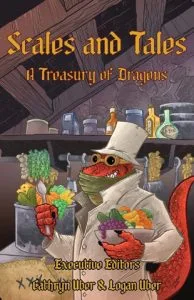
Scales and Tales is a brand-new paperback anthology of short stories about, you guessed it, dragons. Not to be confused with Scales & Tales (a benefit anthology which we discussed here before), this one is edited by Cathryn Uber and Logan Uber. “What happens when there’s a dragon at summer camp? Do dragons ever get lonely? If dragons were endangered, would you work to keep them safe?” Find the answers to these and many other questions over at Barnes & Noble.
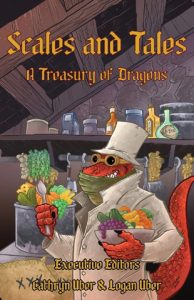
image c. 2026 Brothers Uber
Original post written by rodney

One of the great things about Spooky Season is the fact that for most of October a number of channels are running predominantly horror movies, one after another. I feast on this fare, watching my favorites when I can, and recording others to view later on, such as during the onslaught of Xmas movies sure to immediately follow. It can be even rewarding to watch the original of a horror movie to compare it with a later remake. One such movie was The Fly…

Now the 1958 version of The Fly was actually a good movie for its day compared to other syfy horror movies of its time, using the available technology back then, and incorporating good acting such as provided by iconic Vincent Price. The film couldn’t show us the gradual transformation of the scientist into a monstrous hybrid, and so for much of the movie we had to imagine what was going on behind the cloth veil that the poor soul wore. We did, however, see one clawed hand, hear the wretched man slurp his meals, and briefly see his fully-transformed head…

The teleported fly wound up with a human head on an insectile body, and creepily enough wound up ensnared in a spider web, pleading in a tiny voice for help as a spider advanced on his captive form. This scene can continue to wow audiences to this day…

Now the 1986 version of The Fly even while forty years old today had technological advancements at its disposal, and Jeff Goldblum’s portrayal of the title character is powerful as we watch him first gain enhanced strength and stamina then undergo a grotesque physical and psychological deterioration as insect traits take over. It’s goodbye to human body parts like fingernails and teeth as brilliant but eccentric scientist Seth Brundle becomes “Brundlefly…”
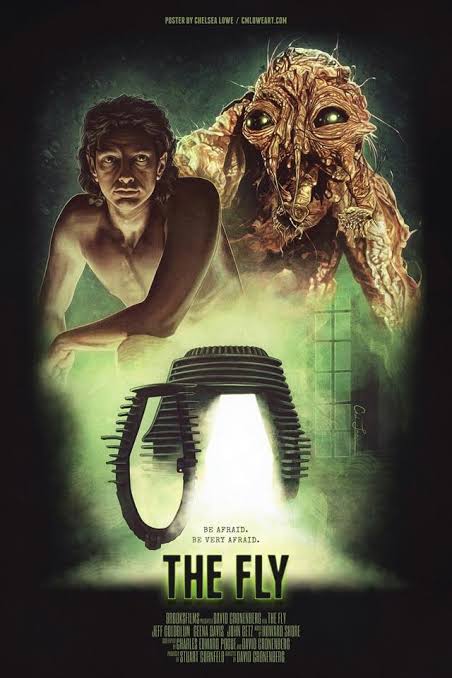
The Fly directed and co-written by David Cronenberg and starring Jeff Goldblum and Geena Davis has held up well over time since then, and continues to be a horrific masterpiece…
So someone please get an extra-extra-large container of Raid, and Happy Halloween to y’all! And please stay away from teleportation chambers, which are not up to Starfleet standards yet…
Original post written by vulpesffb

New-ish author we discovered at WorldCon this year: Martin Cahill. Their new book is called Audition for the Fox. “Nesi is desperate to earn the patronage of one of the Ninety-Nine Pillars of Heaven. As a child with godly blood in her, if she cannot earn a divine chaperone, she will never be allowed to leave her temple home. But with ninety-six failed auditions and few options left, Nesi makes a risky prayer to T’sidaan, the Fox of Tricks. In folk tales, the Fox is a lovable prankster. But despite their humor and charm, T’sidaan, and their audition, is no joke. They throw Nesi back in time three hundred years, when her homeland is occupied by the brutal Wolfhounds of Zemin. Now, Nesi must learn a trickster’s guile to snatch a fortress from the disgraced and exiled 100th Pillar: The Wolf of the Hunt.” Find out more over at Tachyon Publications.

image c. 2026 Tachyon Publications
Original post written by rodney
On October 2, 2026, a blog was posted to Fur Affinity’s Fender journal (for FA announcements), with the long announcement post titled “Support Fur Affinity’s Community Funding“, that FA had launched a GoFundMe to help cover costs to keep Fur Affinity running. (with Journal Header reminder of that FA can also be supported via FA+, the FA shop (plushies etc), & Ko-fi).
The GoFundMe surpassed their $180K USD goal, to help cover six months of cost, and is now currently at $197,606 raised. Later in the Fur Affinity message it is referred to as “our first annual funding drive.”
Note: FA will be offline for important updates on October 7, 2026 09:00 PM – October 8, 2026 07:00 AM.
Original post written by earthfurst


