The plush is only going to made in France
Original post written by Ahmar Wolf

Take a look at our contest winner for december! winners at https://photography.furryrefuge.com/gallery.php
photo taken by VonderTheSeawolf


Whitewater State Park, Altura, MN
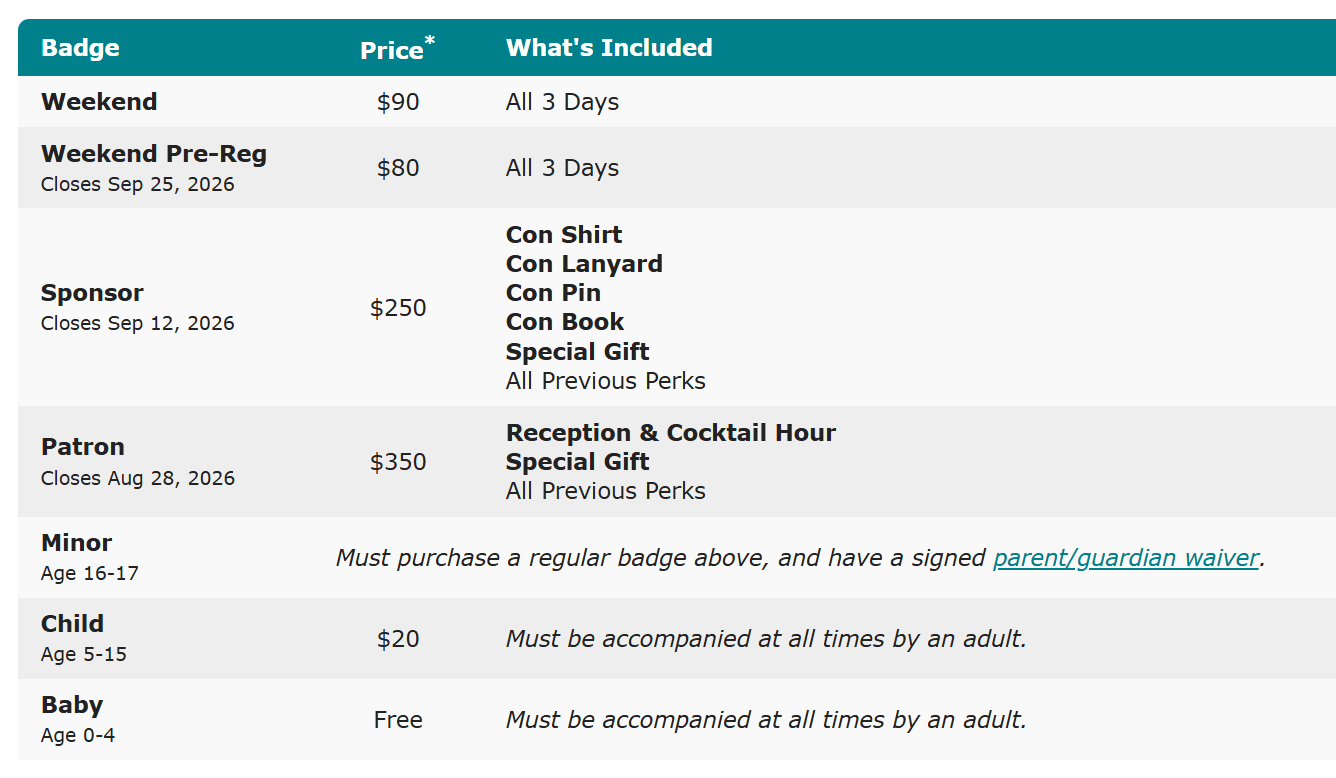
2 prices $99 and $230
For more Info https://www.midwinterfrolic.org/
Original post written by Ahmar Wolf

In response to the GPG.Fail attacks, a Hacker News user made this claim about the 64-bit “Long Key IDs” used by OpenPGP and GnuPG, while responding to an answer I gave to someone else’s question:
OK, to be clear, I am specifically contending that a key fingerprint does not include collisions. My proof is empirical, that no one has come up with an attack on 64 bit PGP key fingerprints.
This was a stupid thing to say to me, of all people.
And thus:
Save this file as pubkey1.asc:
-----BEGIN PGP PUBLIC KEY BLOCK-----
xjQEZVQvDBYKCSsGAQQB2kcPAQEHQPlChumZ771BEWmLgtsrm2QUf3YE4xSbpiRr
wGelIDITzShDb2xsaXNpb24gS2V5IDEgPGtleTFAY29sbGlzaW9uLmV4YW1wbGU+
=8+QC
-----END PGP PUBLIC KEY BLOCK-----
Save this file as pubkey2.asc:
-----BEGIN PGP PUBLIC KEY BLOCK-----
xjQEZVRJOxYKCSsGAQQB2kcPAQEHQE5YOa8jzfZ1IAUmqaxKvrGdq3RJWQ1QBfh4
9ffaD/S3zShDb2xsaXNpb24gS2V5IDIgPGtleTJAY29sbGlzaW9uLmV4YW1wbGU+
=Ah4C
-----END PGP PUBLIC KEY BLOCK-----
Run the following commands, and despair:
gpg --list-packets pubkey1.asc | grep keyid
gpg --list-packets pubkey2.asc | grep keyid
You will observe the following:
$ gpg --list-packets pubkey1.asc | grep keyid
keyid: 948F9326DD647C78
$ gpg --list-packets pubkey2.asc | grep keyid
keyid: 948F9326DD647C78
However, the public keys and full fingerprints are different for each public key.
This was the result of a Birthday attack against the 64-bit size of the “Long Key ID” feature of OpenPGP.
I’ve written about the Birthday Bound before. But generally:
…then you only need about or
inputs before your collision probability approaches 50%.
Since the output space of a Long Key ID is 64 bits, there are possible Long Key IDs. However, you expect a collision with about 50% probability after only
Long Key IDs are generated.
This is a widely known fact about cryptography, and the crux of the attack.
EDIT: Apparently it was also done before. In 2019.
The full attack took about 3 days on a laptop, running in the background while I was doing other work.
This is within an order of magnitude of the same runtime needed to break Rainbow, for comparison.
Because it was a memory-constrained device, the strategy looked roughly like this:
sort command on this enormous file (~57 hours).
I could have done it faster if I felt like using a cloud provider, but I didn’t want to put too much work into this.
Virtually no cryptography expert worth listening to will be surprised by this.
To head off any questions like this, we need to be clear that a successful collision is, in and of itself, a successful attack. This is cryptography. None of us can weasel-word our way out of that fact.
But it’s still worth entertaining: what can you do with such a colliding keypair in practice?
Let’s say I was the maintainer of a popular open source package and got a bunch of Linux kernel devs to sign pubkey1.asc instead of publishing it here.
If I decided to go rogue in the future, I could replace the public key that other people will download with pubkey2.asc. Especially if I secretly control the PGP key server they’re using.
Users following instructions that mean to verify the Long Key ID instead of the full fingerprint will see that pubkey2.asc checks out, and then install backdoored software. All their apes, gone!
If I’m ever confronted about it (especially by the folks that signed my actual public key), I could point out that my private key was never compromised, and claim the attacker clearly did a “preimage” attack on my Long Key ID. Thus, there’s plausible deniability in the absence of other forensics.
Especially since PGP users advise each other to check the Long Key ID. (Alternative archive.)
This kind of attack has to be setup in advance. Collision attacks aren’t preimage attacks. But it’s a realistic exploit scenario.
private1.asc
-----BEGIN PGP PRIVATE KEY BLOCK-----
xVkEZVQvDBYKCSsGAQQB2kcPAQEHQPlChumZ771BEWmLgtsrm2QUf3YE4xSbpiRr
wGelIDITAAEAX7B7GVQBGE9VxroU6ilaSYp7D0QrZFRgbLDBM+uVTxEMis0dVGVz
dCBLZXkgMSA8a2V5MUBleGFtcGxlLmNvbT4=
=hStH
-----END PGP PRIVATE KEY BLOCK-----
private2.asc
-----BEGIN PGP PRIVATE KEY BLOCK-----
xVkEZVRJOxYKCSsGAQQB2kcPAQEHQE5YOa8jzfZ1IAUmqaxKvrGdq3RJWQ1QBfh4
9ffaD/S3AAEAA6ztnLShhUmlWLdG8TLgtyT6SsW+EibmRMuMOzUK5iMQN80dVGVz
dCBLZXkgMiA8a2V5MkBleGFtcGxlLmNvbT4=
=Tdrc
-----END PGP PRIVATE KEY BLOCK-----
Do not make stupid “empirical” claims about the security of cryptosystems, especially when the cost to disprove you is so low.
Header art by Kyume.
Original post written by Soatok


I think an explanation is needed. First that Odysseus Vizard is very much like Hercule Poirot. Except in these stories he is a small blue bird. The other it is a collection of Odysseus Vizard stories. 7 in fact
The biggest difference between all of these tales and the stories by Agatha Christie.
The stories are not as intense or drawn out. They were obviously written for a furry audience, and light readers at that.
The only reason I mention this is. I consider myself a light reader, I won’t mention how long it took me to read all 7 novels. Just that I did enjoy them, found them interesting. Also you could leave for a while a return to the stories. Often with my schedule I have to do this when I start reading something, I have no choice but put them aside for a while.
No you don’t have to read the original works to enjoy them. I have not read or seen a lot of the original works. But I do enjoy them.
So how do I rate all 7 stories? To be honest I give a 8 out of 10 and would recommend it to anyone wanting to read a furry mystery with very interesting characters. I would say the gathering of the suspects was so damn unique.
Original post written by Ahmar Wolf

Original post written by Ahmar Wolf